
A pet water fountain can make drinking more appealing by changing the outlet, location or access to water. It may help a cat that likes a running tap or a dog that prefers a broad drinking surface. The useful result is a pet drinking comfortably-not simply investigating a new object.
Quick answer: A pet fountain can offer a more appealing outlet or a better water location, but increased drinking is not guaranteed. Introduce it alongside familiar fresh water, improve access and observe actual drinking. Do not interpret a falling shared tank level as one pet’s measured intake.
On this page
- What evidence supports
- WOPET examples
- Introduction plan
- What to observe
- Common questions
The best way to find out is to offer the fountain alongside familiar fresh water and observe what changes. Keep food, location and other routine factors steady where possible so you are not guessing which change made a difference.
Start with preference, not a promise
Some animals respond to flowing water; others prefer a still bowl. A small study comparing fountains and bowls in healthy cats did not establish a substantial increase in water intake or urine dilution. A fountain is therefore an option to try, not a guaranteed hydration treatment.
If your pet suddenly drinks much more, drinks much less, seems unwell or struggles to access water, contact your veterinarian. Changing the container should not delay finding the reason.
Make access easier first
Choose a quiet place your pet can reach without being trapped by another animal. Avoid squeezing the station behind furniture, where you cannot inspect it, or placing it in a route a dog or person uses repeatedly. Give the pet room to stand and leave.
In a mixed household, a cat may need a separate water point from the dog. Do not assume a large shared fountain solves access simply because the tank holds enough water. Watch who approaches, who waits and who leaves without drinking.
Introduce one change at a time
- Prepare the filter and assemble the fountain using its exact manual.
- Leave the familiar fresh-water bowl available nearby or in its normal place.
- Let the pet investigate without carrying or pushing them toward the outlet.
- Observe several ordinary drinking opportunities rather than judging the first minute.
- If needed, adjust the permitted mode or location one at a time.
For a sensor model, watch whether a cautious approach reliably starts the flow. A pet that backs away when the outlet activates may need more time or a different supported setting. Do not run the unit dry while experimenting with sound or modes.
Match the drinking station to the petW03: a smaller ceramic station with location flexibility
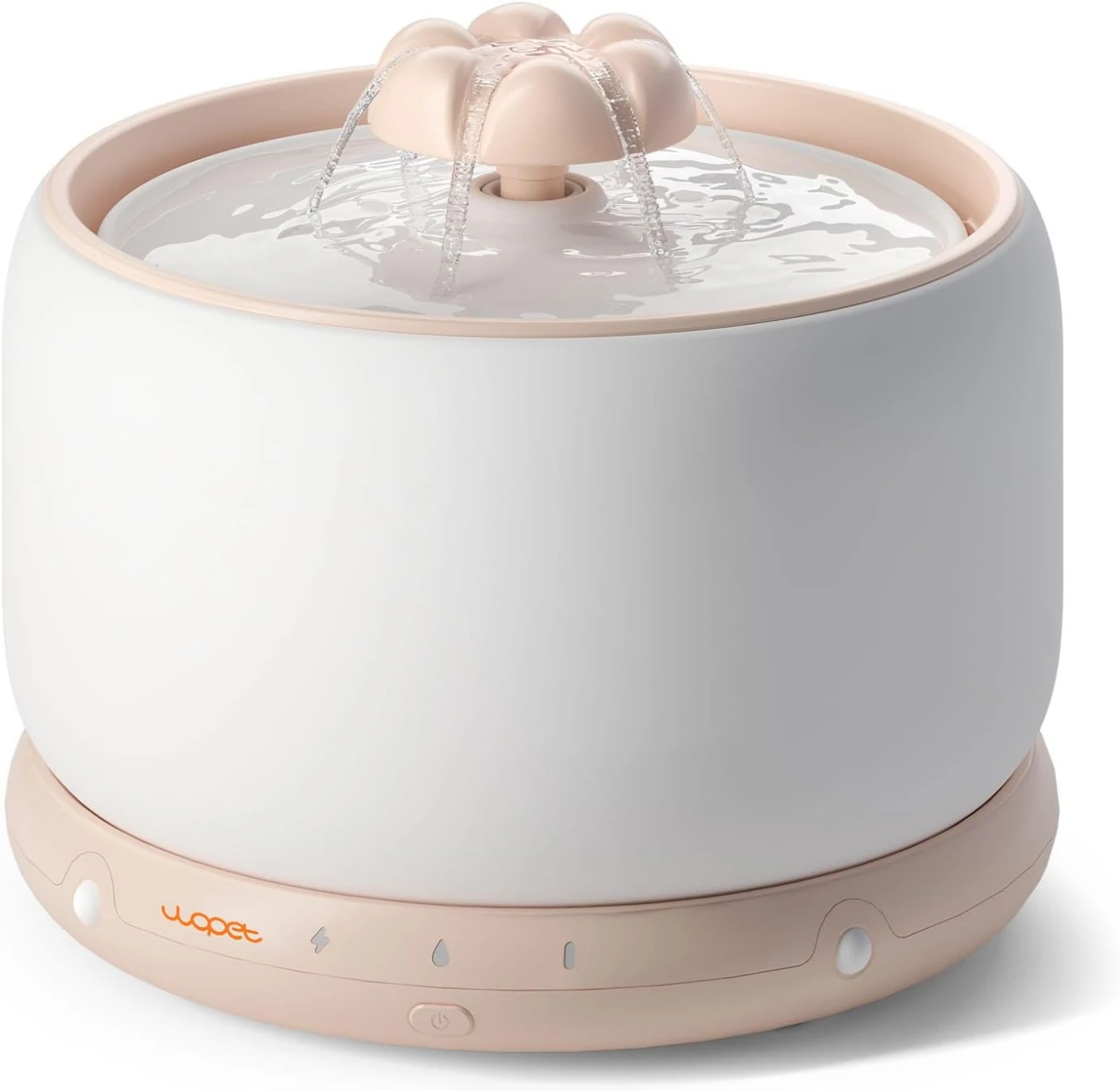
WOPET W03 · 3L · Rechargeable / cordless
The 3L cordless W03 Wireless cat fountain lets you try a suitable location away from the wall socket. That is useful when your cat’s preferred quiet corner has no convenient outlet. Keep its charging routine dependable and lift the ceramic body carefully during washing.
W600 Pro: more room for dogs or several cats
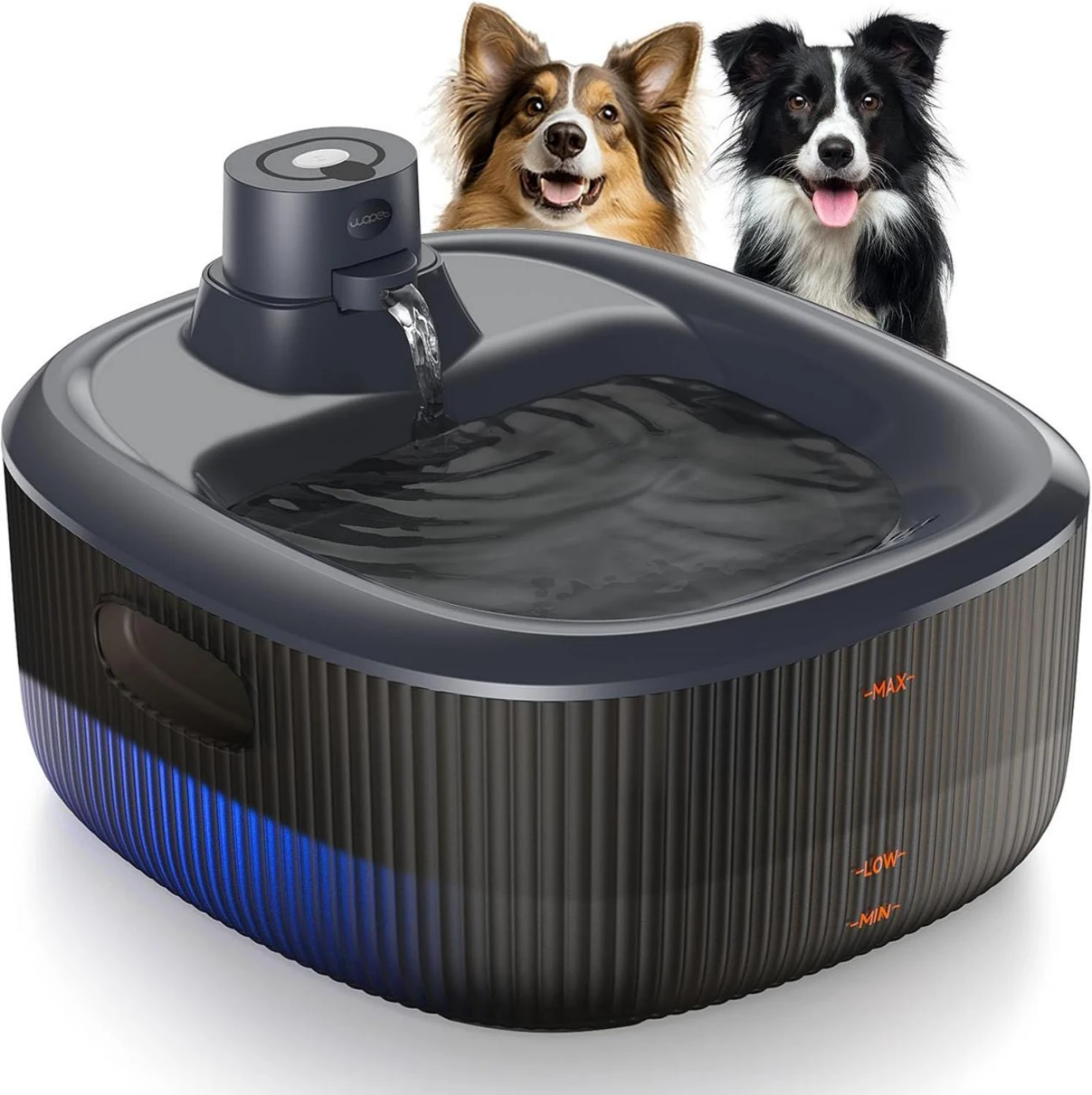
WOPET W600 Pro · 6L · Rechargeable / cordless
The rechargeable 6L W600 Pro pet fountain is a larger option for a dog or multi-cat home. Its value is capacity plus placement flexibility. Check whether every pet can approach comfortably; a shy cat may still need another station.
A08: a broad fixed station for heavier shared use
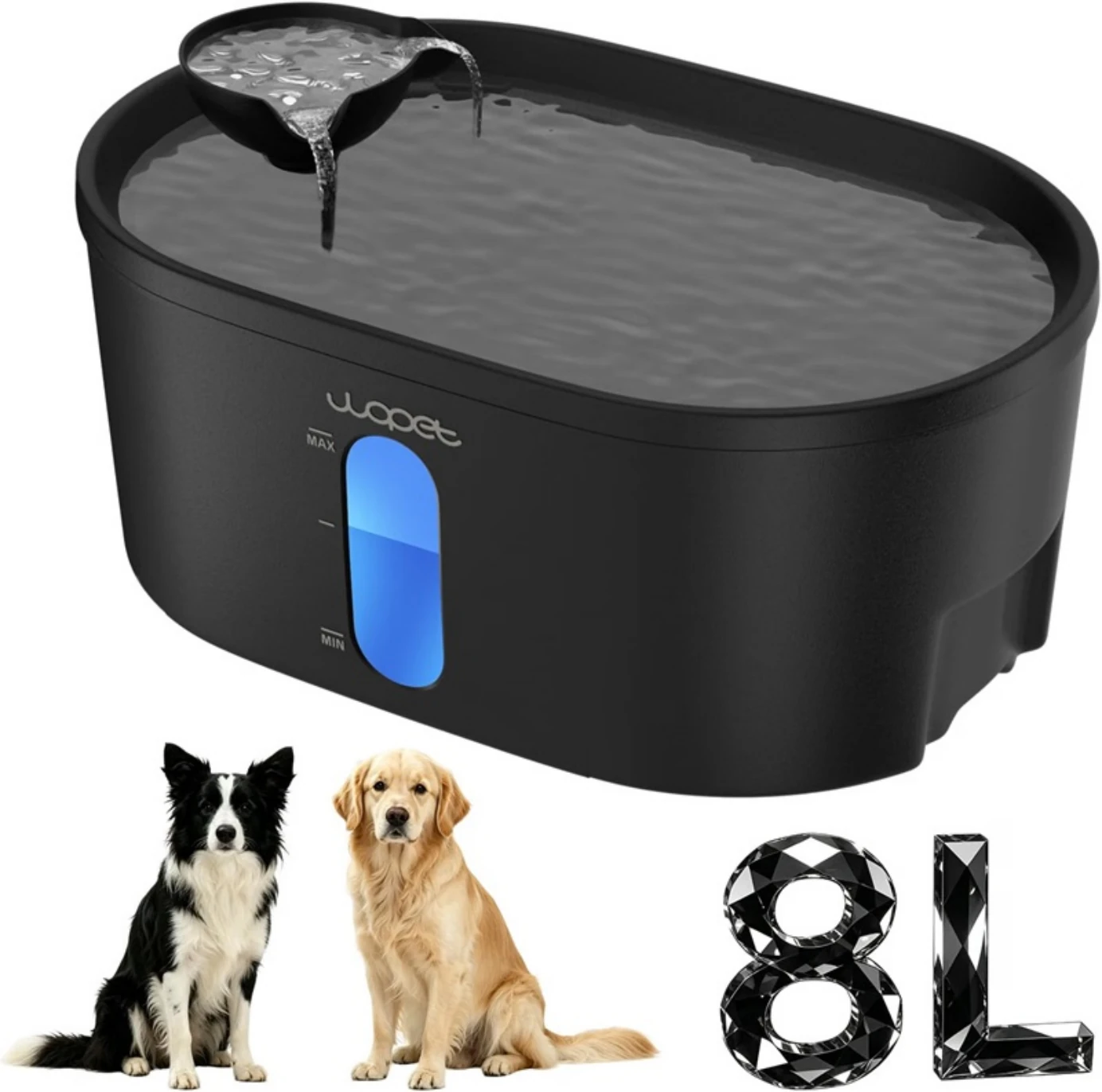
WOPET A08 · 8L · Plug-in
The plug-in 8L A08 dog water is designed for dogs and multi-cat households. Compare it when a broad drinking area and more refill room are useful, and there is a suitable outlet. It is a different household fit from a compact cat-only station.
How to tell whether the change helps
| Observe | Useful interpretation | Avoid assuming |
|---|---|---|
| The pet returns and drinks calmly | The station appears acceptable. | Every visit means more total water consumed. |
| Tank level falls | Water has left the reservoir. | All loss is drinking; splashes and evaporation also count. |
| A cat uses the bowl instead | The familiar option remains useful. | The cat must be forced to switch. |
| One pet waits for another to leave | Access may need improving. | A larger tank alone will fix the problem. |
Keep simple notes about normal visits, water condition, spills and which pet uses each station. The point is to make better care decisions, not to create a precise intake measurement from a shared tank.
Remember that water also comes from food
Cornell’s feline hydration guidance explains that food moisture contributes to water intake. A cat eating wet food may drink less at the station than one eating dry food. Compare a pet with their own normal pattern rather than competing with a generic target or another animal.
Fresh water, accessible choices and regular care matter whether the preferred container is a fountain or a bowl. Keep the option the pet uses comfortably, and ask your veterinarian about any health-related intake goal.
A gradual introduction plan
Prepare the station before inviting interest
Choose a level location with enough room for the pet to approach and leave. Assemble the fountain using the correct manual, prepare the filter as directed and check normal flow before the pet relies on it. Remove packaging, but do not add scents or flavourings to make the device more interesting.
Keep the familiar water source available. The first goal is a calm choice between appropriate options. A thirsty pet should not have to solve an unfamiliar device because their usual bowl has disappeared. Avoid moving food, changing several rooms and introducing the fountain all at once if you want to understand the response.
Watch the approach as well as the drink
Notice whether the animal walks straight up, stretches forward while keeping its body away, or leaves when the outlet activates. Those behaviours tell you which part of the setup may need attention. A hesitant approach can be about sound, space or another animal rather than the water itself.
For dogs, look at muzzle room and posture during a complete drink. For cats, look for an unobstructed exit and a calm position at the tray. Do not carry the pet to the outlet or hold their head near it. Let them investigate at their own pace.
Make one permitted adjustment at a time
If the pet avoids the station, change one factor such as location or a supported mode and observe again. Keep water quality and other routines steady. Repeatedly moving the device between several corners can make it harder to tell which location actually helps.
If the pet continues to prefer a bowl, keep providing the bowl. A successful care routine does not require every animal to become a fountain user. You may still use the fountain as another option while deciding whether it earns its space.
Keep a useful observation log
| Note | Why it helps |
|---|---|
| Which pet visited and whether they drank | Separates drinking from curiosity or play. |
| Position and selected mode | Lets you connect a response to one change. |
| Other pets nearby | Highlights possible blocked access. |
| Spills, wet paws or water on the floor | Prevents tank loss being mistaken for intake. |
| Water condition and maintenance | Helps distinguish an introduction problem from a care problem. |
A short note at normal care checks is enough. You do not need to film every visit or build a precise intake chart from an unmeasured reservoir. If your veterinarian asks you to measure drinking, use the method they recommend and explain whether pets share sources or receive moisture-rich food.
Match the product to the change you are making
Use WOPET W03 when the relevant change is a smaller ceramic station in a better cordless location. Its 3L reservoir and rechargeable base are practical distinctions; they do not predict how much more a particular cat will drink. Keep charging separate from water changes.
Use W600 Pro as the larger rechargeable comparison when several users or a dog need more refill room. Watch the least confident animal rather than relying on total visits. A dog may use the station frequently while a cat quietly avoids it.
Use A08 when a larger fixed station near a suitable outlet fits the household. Its broad 8L design is aimed at dogs and multi-cat homes. That capacity can support heavier use, but access and cleaning still determine whether the station works well.
Common questions
How long should I give a pet to accept a fountain?
There is no reliable deadline that fits every pet. Keep fresh alternatives available and look for calm progress through ordinary visits. If avoidance persists, reconsider the location or design rather than forcing continued use. A bowl remains an acceptable option.
What if my cat only plays with the water?
Playing shows interest, not necessarily drinking. Check the floor, water level and actual visits, and keep a familiar water source available. Move the station only for a clear practical reason and keep any mode changes within the manual’s instructions.
Can more fountain visits prove better hydration?
No. Visits may be brief investigations, shared use or play, and tank loss can include spills. Observe the animal’s normal pattern and discuss health-related concerns with a veterinarian. The fountain is a container choice, not a diagnostic instrument.