

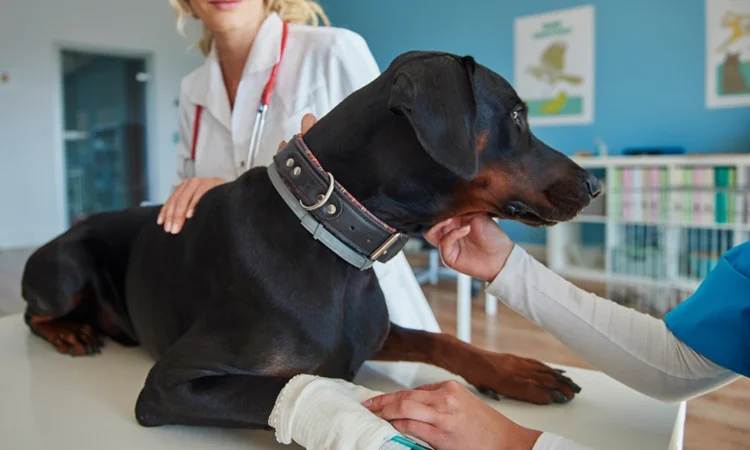

A dog that suddenly starts limping after a run in the park or a jump off the sofa can leave owners unsure whether to wait it out or head to the vet. Many limps are caused by minor muscle strains that settle with rest, but some point to damage in the knee. A dog ACL tear, more accurately called a cranial cruciate ligament (CCL) injury in dogs, is one of the most common causes of hind leg lameness. Knowing the typical signs of each can help you decide how quickly to seek veterinary advice.
Signs That Point to a Minor Strain
Strains happen when a muscle or tendon is overstretched, often during play, sudden turns or exercise after a period of inactivity. These injuries usually show signs like these:
- A mild limp that improves noticeably within one to three days of rest.
- The dog still bears some weight on the leg when standing and walking.
- Stiffness that is worse after resting and eases with gentle movement.
- Mild tenderness when the muscle is touched, without obvious swelling at the joint.
- Normal appetite, energy and willingness to play once the soreness settles.
Signs That Suggest a Possible ACL Tear
The cruciate ligament stabilises the knee, and when it tears partially or fully, the joint becomes unstable. Signs that may point to this type of injury include the following:
- Sudden lameness in a hind leg, sometimes with the dog holding the leg up completely.
- Toe-touching, where only the tips of the toes rest on the ground.
- Sitting with the affected leg stretched out to the side rather than tucked under the body.
- Swelling or thickening on the inner side of the knee.
- A clicking sound when the dog walks, which may indicate damage to the meniscus.
- A limp that improves briefly, then returns or worsens with activity.
Comparing the Two at a Glance
Owners whose dogs need structured recovery may later be referred to a veterinary rehabilitation and hydrotherapy centre, but the first step is understanding which type of injury is likely. The comparison below highlights some practical differences:
| Factor | Minor Strain | Possible ACL Tear |
| Common risk factors | Weekend bursts of exercise, slippery floors | Excess weight, certain breeds, gradual ligament weakening |
| How it is confirmed | Physical examination | Drawer or tibial thrust tests, often with X-rays |
| Typical management | Rest, controlled walks, pain relief if prescribed | Surgery for many dogs, or conservative management in some cases |
| Recovery time | Days to a couple of weeks | Several months, including rehabilitation |
| Risk to the other leg | Low | Raised, as many dogs later injure the opposite knee |
What to Watch at Home in the First 48 Hours
Careful observation during the first couple of days can give your vet useful information and help you notice whether things are improving. While keeping your dog rested, pay attention to details like these:
- Whether the limp gets better, stays the same or becomes worse.
- How your dog sits, stands up and lies down.
- Any swelling, heat or sensitivity around the knee or other joints.
- Reluctance to climb stairs, jump into the car or get onto furniture.
- Short video clips of your dog walking, which can be shared with the vet.
Knowing When to Act
A limp that eases quickly with rest is often a minor strain, but lameness that persists beyond a couple of days, returns repeatedly or comes with swelling and toe-touching should be checked by a vet. Seek prompt care if your dog cannot bear weight at all, shows signs of severe pain or has an obvious injury. Early assessment can help confirm the cause and plan treatment that protects both knees in the long term.
Reach out to Bluewater Vet Acupuncture & Rehabilitation if your dog’s limp has not settled.